How to Choose a Push Pin Travel Map
Most regrets with a pin map come from three things nobody checks in the listing photos: what the pins go into, the size against the actual wall, and whether the labels will be covered by pins.
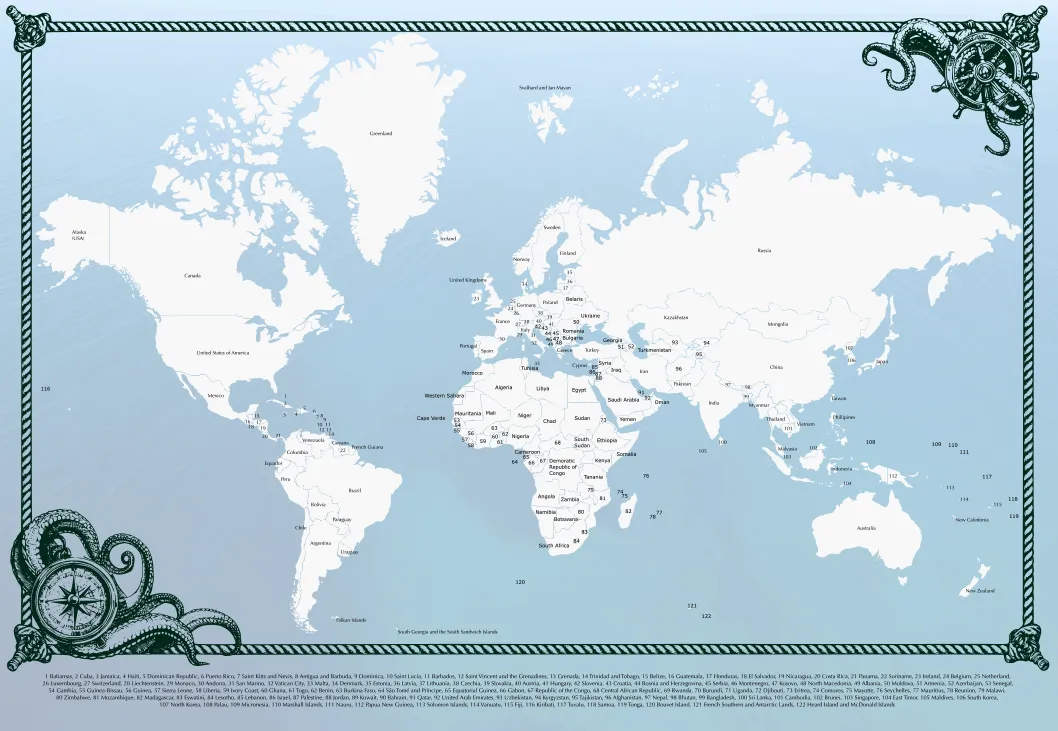
Listing photos of push pin maps all look the same: a big map over a sofa, a few dozen pins, good lighting. What they don't show is the part you live with. Does a pin still stand up straight a year later? Can you still read Belgium once there's a pin in Brussels? Will it look right on your wall, not the one in the photo?
We make one of these maps, so weigh our opinions accordingly. We'll say where we think we're a good pick and where you'd be better served by something else. The checklist below is what we'd look at on any map, ours included.
The material decides everything else
There are three common builds, and each one fails differently.
Paper posters
The cheapest option, and often the prettiest print. The problem is that paper has nothing for a pin to grip. You either mount it on a board or frame it, and a framed poster can't take pins at all without taking it off the wall. Fine if you want a map to look at. Frustrating if you plan to add a pin every few months.
Cork or wood boards
The map is printed on or glued to a board, so pins go straight in and stay there. That's the best pin-holding you can get. The trade-offs are weight, the need for real wall anchors on larger sizes, and moving: a 5-foot board is awkward to get through a doorway. Boards also tend to cost more per square foot and ship in big boxes.
Fabric tapestries
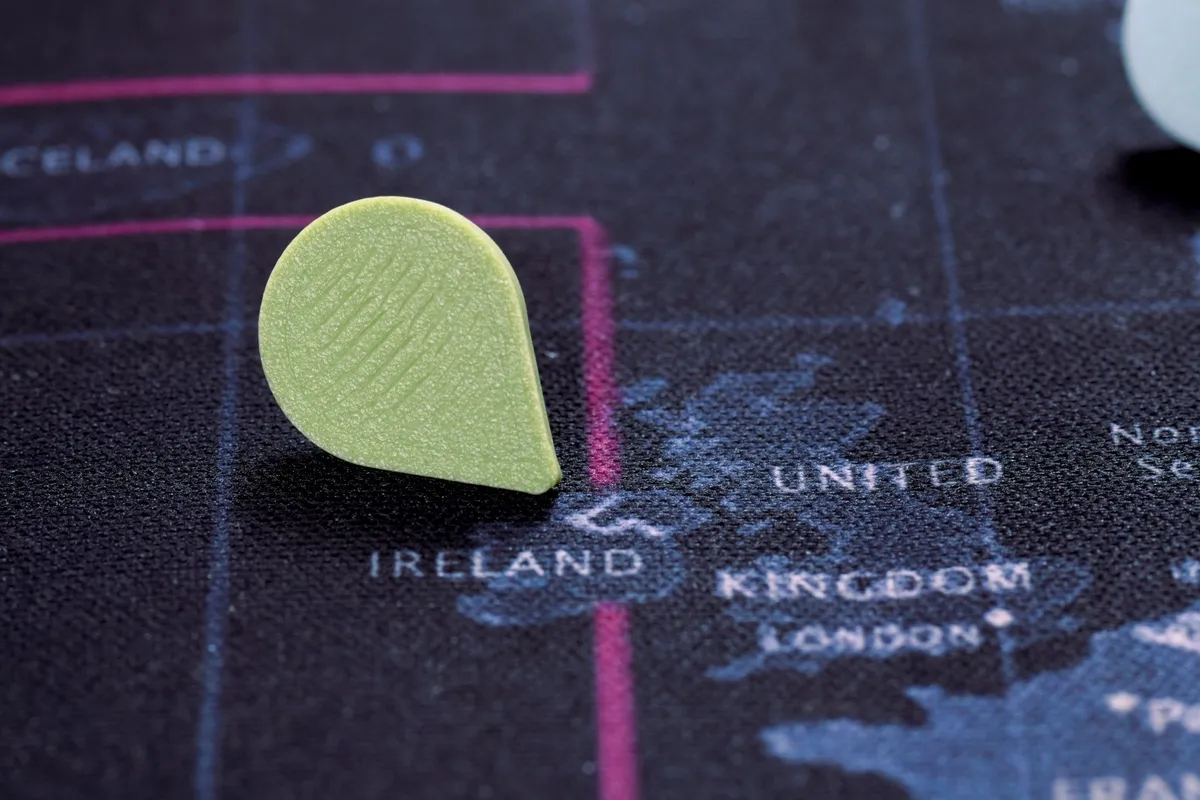
Light, rolls up for a move, hangs without a frame, and the print doesn't glare the way a glossy poster can. Our Nautilus map is one of these. The honest catch is that fabric on its own doesn't hold a pin firmly. Either the pin needs a backer behind the fabric, or the tapestry goes over a board. The two setups, side by side:
If a listing for a fabric map doesn't mention backers or a board, assume you'll need one or the other. Our guide to hanging a map tapestry covers both setups step by step.
Size it for your wall, not the photo
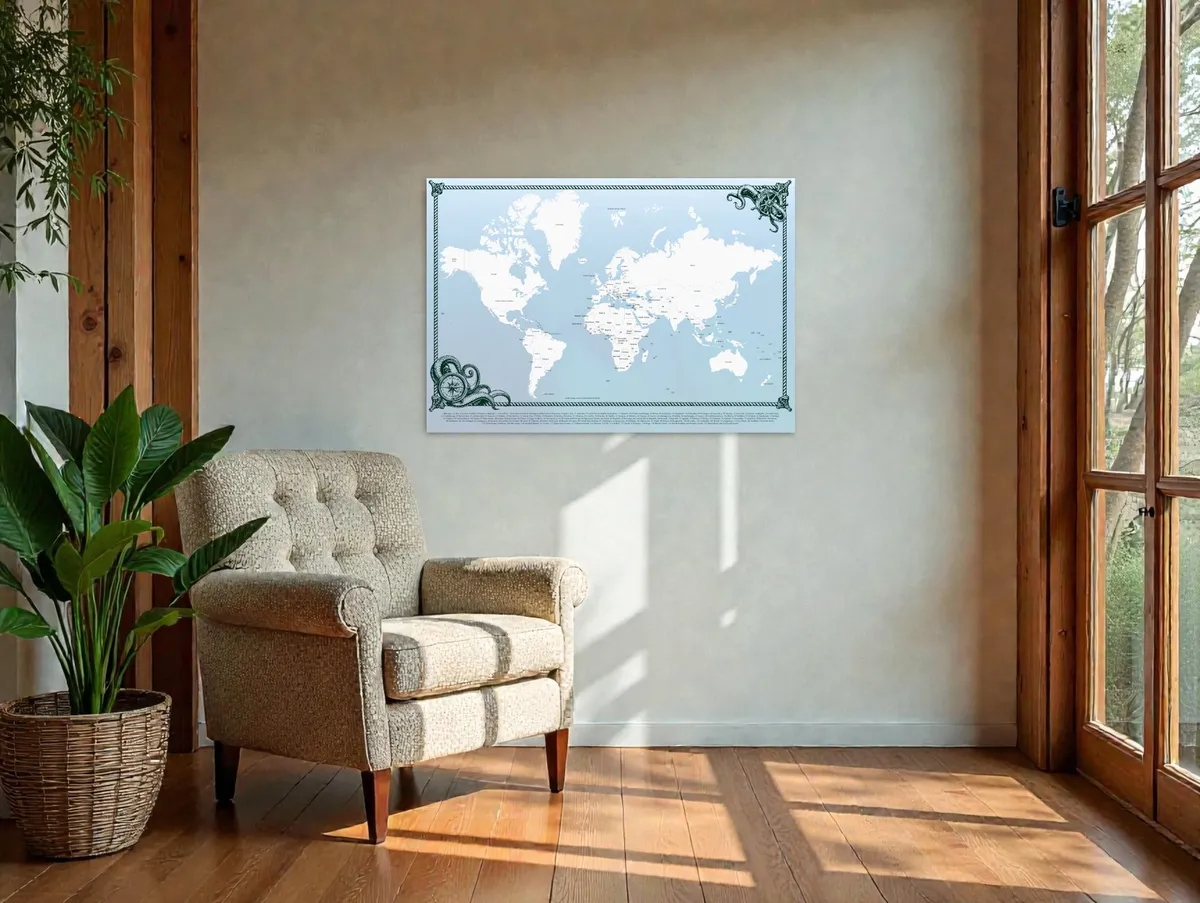
Almost every listing shows the largest size over a big sofa. Most people order a size smaller than they need, then wish they'd gone up once Europe fills with pins. Measure the furniture it'll hang over and aim for a map about two-thirds as wide. Here are our four sizes to scale over a standard 84-inch sofa:
We'd add one rule. If most of your travel is in a crowded region (Europe, the Caribbean, Central America, Southeast Asia), size up once. Small countries get very small, very fast.
Labeled or unlabeled
A labeled map lets a guest find Portugal without asking. An unlabeled one looks cleaner and more like art, and pins never cover any text. Both are reasonable. We offer the Nautilus as "Countries Labeled" or "No Text" for exactly that reason.
If you'll pin a lot in small countries, go unlabeled or go bigger, because labels in Europe disappear under the first dozen pins. If the map is mostly for conversation with guests, labels help.
World map or United States
A world map rewards international trips. A US map rewards road trips, and it's the more satisfying one for families who mostly drive, because every state line is a new pin. The Starter Bundle comes with either. If you want both, the free online map tracks countries and all 50 states side by side, so the wall can hold whichever one you look at more.
Look closely at the pins
Pins are the part people use every week, and they're where cheap maps cut corners. What to look for:
- Balanced heads. Tall, top-heavy heads tip and hang upside down in fabric. Flat heads sit close to the surface and keep their angle.
- Backers included. For fabric maps, a small backer that presses onto the pin tip from behind is what keeps it tight.
- Enough colors. Couples and families want one color per person, plus one for trips together.
- Enough pins. Starter sets run out quickly. Check that more are sold on their own.
Photos and stories: string, prints or a tap
A pin says where. What people ask about is what happened there. There are three ways to answer that on a wall:
- Photos with string. Print small photos, hang them around the edge of the map, and run a string to each pin. It looks great with five trips and chaotic with thirty. Budget time and wall space.
- A photo row beside the map. One print per trip in matching frames next to the map. Clean, but it only holds a few trips.
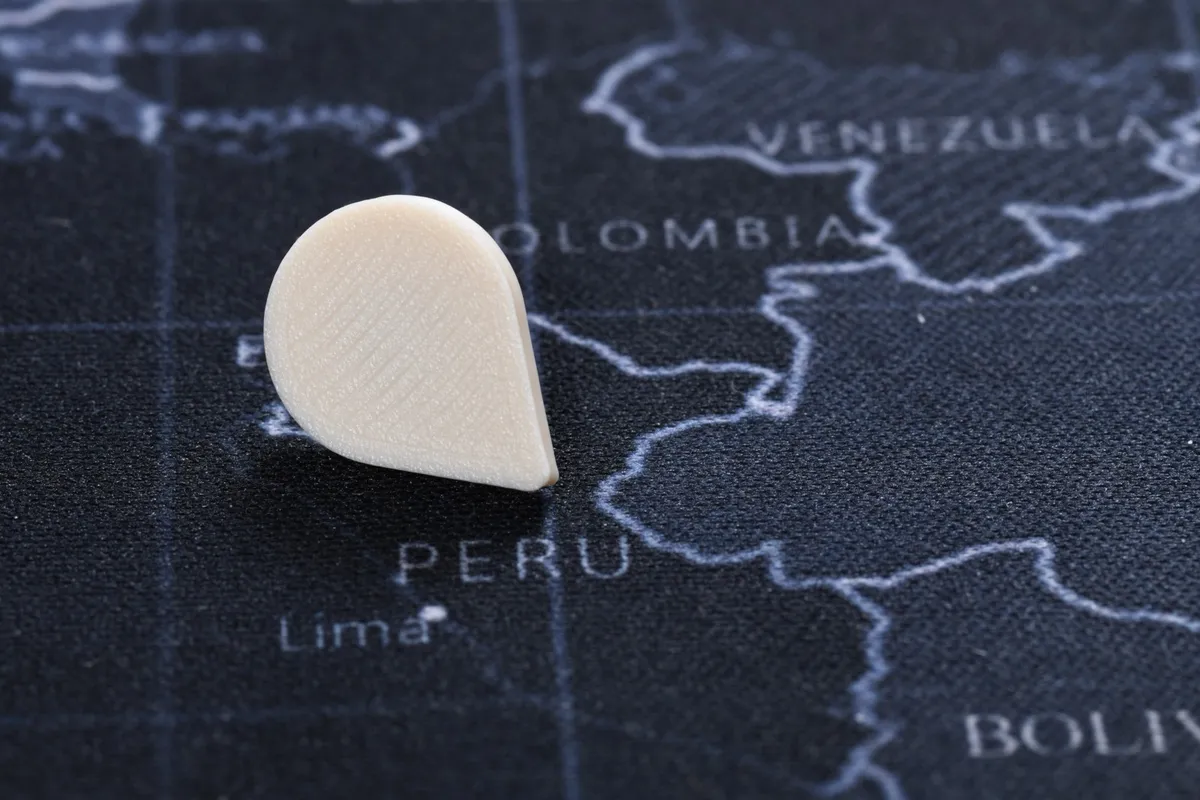
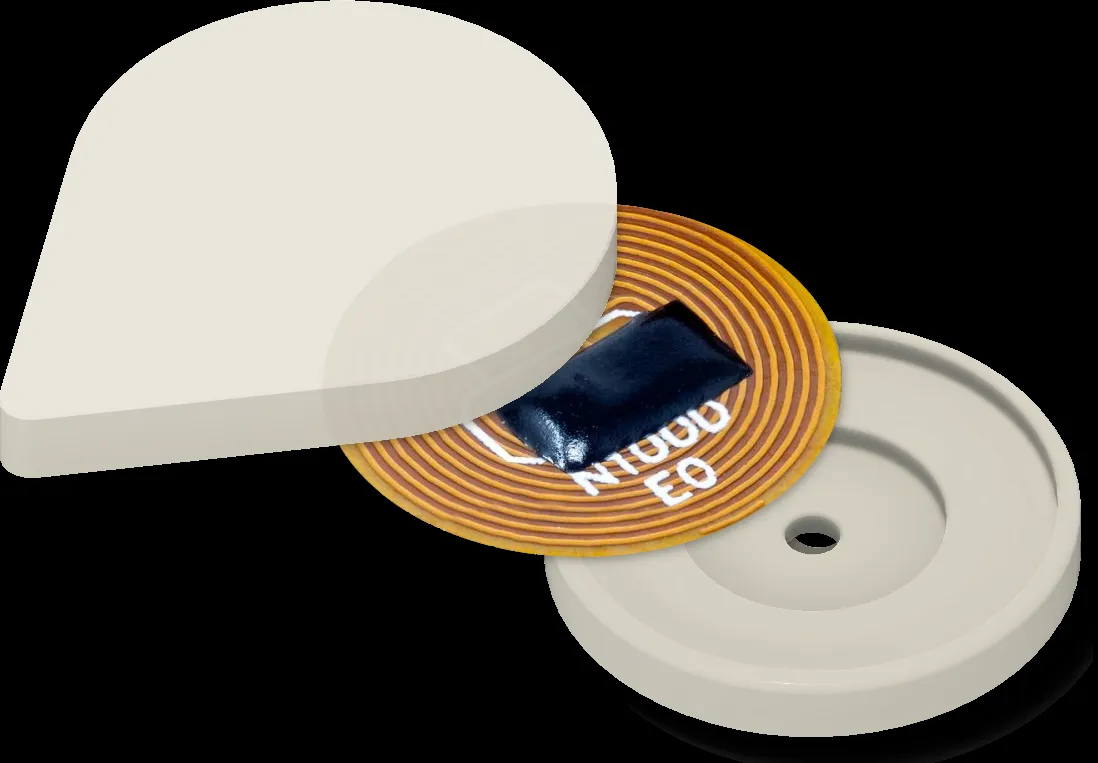
- Pins that open the trip. This is what we make. Hold a phone to a Touch-to-Travel pin and that trip's page opens in the browser, so the photos live on the phone instead of the wall. No app, and no subscription needed for the pins themselves. Photo galleries and a song for each trip come with the Globetrotter Club.
The pins also work in any map that holds a pin, so if you already love your map, you don't need a new one to add stories to it.
Personalized maps
"Personalized" usually means a printed title or names ("The Smiths' Adventures"), sometimes a date. We don't print names on our maps right now, so if that's the point of the gift, look for a maker that does. The pins do personalize it in a different way, since each one opens that person's own trip, but they're not the same thing as a name on the print.
Framing and hanging
A frame makes a paper map look finished and makes pinning awkward. A board gives the cleanest pinning. A fabric map can hang from pins, grommets or a curtain rod with no frame at all, which is a real saving at 60 or 72 inches wide, where custom frames get expensive. Whatever you choose, check whether the hanging hardware is included or extra.
What to expect to pay
Paper posters are the cheapest. Fabric tapestries sit in the middle and don't need a frame. Framed and board-mounted maps cost the most, and large ones often add real shipping costs. For the pins, the price per pin and whether backers are included matter more than the headline price of a starter set. Our current prices are on the maps page; US orders over ship free, and everything has a 60-day return window.